 Skip to content


Waking up with a flat stomach, only to feel bloated and uncomfortable by midday, is a frustrating experience many of us know well. That feeling of tightness or swelling can disrupt your day and make you feel less than your best. If you've ever wondered why certain foods seem to trigger this discomfort, you're not alone.
In this guide, we'll explore the common bloating foods to avoid and also suggest what to eat instead to help you feel lighter and more comfortable. By making a few mindful changes, you can start feeling better and bring balance to your gut.
Key takeaways
-
Bloating is a physical reaction to how your gut breaks down certain foods
-
Common culprits include high-fructose fruits, certain vegetables, dairy, and high-fiber foods, but their impact can vary for each person
-
A key to finding relief is to swap out trigger foods for gut-friendly alternatives like rice, lean proteins, and cooked vegetables
-
Beyond diet, simple habits like eating mindfully, staying hydrated, and managing stress can significantly reduce bloating
The science behind bloat: What happens inside?
It’s easy to blame a meal for bloating, but the discomfort is a physical reaction, a sign that your gut is having a hard time breaking down certain foods. When you eat, your food travels through your system, and it’s what happens when undigested particles reach your gut bacteria that matters.
Your gut is home to trillions of bacteria that play a vital role in your health. However, when they encounter carbohydrates that your small intestine can’t properly absorb, they begin to ferment. This process produces gas as a byproduct, and it's this trapped gas that causes that uncomfortable feeling of tightness and swelling.
Here are some of the specific reasons certain foods can trigger bloating:
-
Difficult-to-digest carbs: Your gut bacteria feed on specific types of carbohydrates that are poorly absorbed by your small intestine. When these reach the large intestine, they ferment rapidly, releasing gas that leads to bloating
-
The role of fiber: While fiber is essential for gut health, certain types can be difficult to break down. If you suddenly increase your fiber intake, it can cause significant gas production as your gut adjusts
-
Sugar alcohols: Found in many sugar-free products, ingredients like xylitol and sorbitol are not fully digested. Instead, they ferment in your colon and can also draw water into your intestines, leading to bloating
-
Gut sensitivity: Some individuals have a more sensitive digestive tract that reacts strongly to the gas produced by fermentation, even if the amount is minimal. This can lead to a more pronounced feeling of bloat and discomfort
For a gut-friendly solution designed to address the trapped gas and bloating you've just read about, consider The Good Bug's Bye Bye Bloat.
10 bloating foods to avoid and their gut-friendly swaps
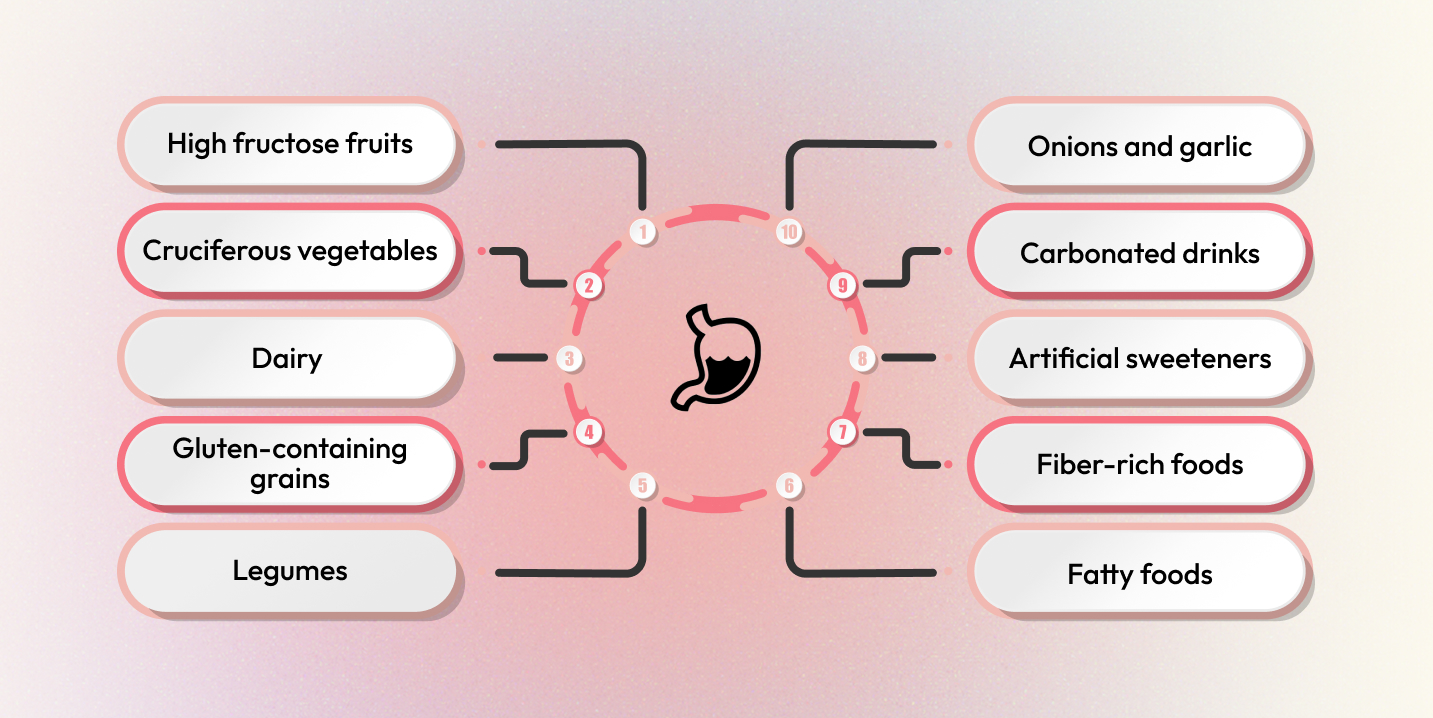
It’s easy to feel lost and disheartened when a seemingly harmless meal leaves you feeling bloated. By becoming a detective of your own diet, you can identify and swap out these common culprits for gut-friendly alternatives.
Here are 10 common foods that most likely trigger discomfort, and what you can try instead:
-
High fructose fruits
This natural sugar found in many fruits, like apples, pears, and mangoes, is poorly absorbed in the small intestine. It leads to fermentation by gut bacteria, causing gas and bloating.
Try this instead: Low-fructose fruits like bananas, berries, and oranges.
-
Cruciferous vegetables
Veggies like broccoli, cauliflower, and cabbage are nutrient-dense but contain a complex sugar (raffinose) that can be difficult for many to digest, causing gas.
Try this instead: Cooked vegetables like zucchini, squash, or green beans.
-
Dairy
If your body lacks the enzyme lactase, it can’t properly break down lactose, the sugar found in milk, yogurt, and soft cheeses. This leads to fermentation and bloating.
Try this instead: Lactose-free milk, almond milk, or coconut milk.
-
Gluten-containing grains
For some people, grains like wheat, rye, and barley are difficult to digest due to the presence of gluten and other fibers, which can trigger a bloated feeling.
Try this instead: Gluten-free grains such as quinoa and rice.
-
Legumes
Beans and lentils contain fiber and a type of sugar that can ferment in your gut, making them a common cause of gas and bloating.
Try this instead: Start with smaller portions, or opt for easily digestible starches like potatoes or rice.
-
Onions and garlic
While they add flavor to many dishes, onions and garlic contain fructans, which are a type of carbohydrate that can cause bloating in sensitive individuals.
Try this instead: Use fresh herbs like ginger or basil for flavor.
-
Carbonated drinks
The fizz in sodas and sparkling water is a gas that can get trapped in your digestive system, leading to an immediate feeling of fullness and bloating.
Try this instead: Still water or herbal tea.
-
Artificial sweeteners
The body can't fully absorb non-caloric sweeteners found in many diet sodas, sugar-free gums, and snacks. When they reach your gut, they ferment and produce gas, leading to bloating.
Try this instead: A small amount of honey or maple syrup.
-
Fiber-rich foods
While fiber is essential, suddenly increasing your intake of it from foods like bran cereals, whole grains, and raw vegetables can overwhelm your gut, leading to significant gas production as your system adapts.
Try this instead: Focus on easily digestible, soluble fibers from foods like oats, bananas, and cooked carrots, and drink plenty of water.
Looking for an easy way to introduce more gut-friendly fiber gradually? Explore The Good Bug’s Prebiotic Fiber Bars.
-
Fatty foods
Foods high in fat, such as fried foods, greasy burgers, and creamy sauces, tend to slow down digestion, causing food to sit in your stomach for a long time, which can contribute to a heavy, bloated feeling.
Try this instead: Lean proteins like chicken or fish and healthy fats from avocados.
Easy tips to beat the bloat
Understanding which foods cause bloating is a powerful first step. Now, let’s move to action.
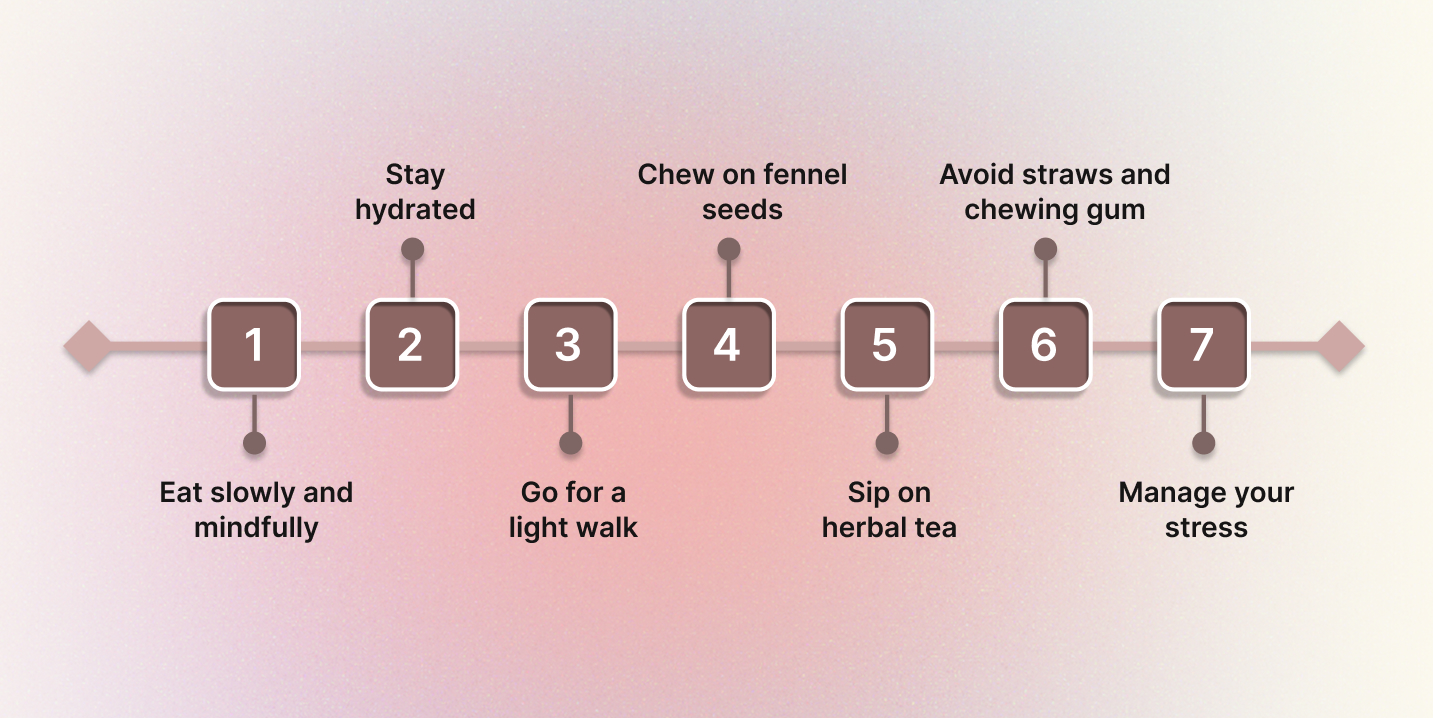
Finding relief isn’t just about what you avoid, but about a few simple habits that can significantly improve how you feel.
Here are some easy-to-implement tips that can help reduce bloating and keep your gut happy:
-
Eat slowly and mindfully: Rushing your meals can cause you to swallow excess air, which gets trapped in your digestive system
-
Stay hydrated: Drinking enough water helps keep your digestive system moving and can prevent constipation, a common cause of bloating
-
Go for a light walk: A short stroll after a meal can stimulate your gut muscles and help move gas through your system
-
Chew on fennel seeds: This traditional remedy can help relax the muscles in your digestive tract and provide a soothing effect
-
Sip on herbal tea: Peppermint and ginger tea are known for their ability to calm the stomach and reduce gas
-
Avoid straws and chewing gum: Both can lead to you swallowing extra air, causing gas to build up in your stomach
-
Manage your stress: High stress levels can impact your digestive health. Practicing mindfulness or gentle breathing can help calm your gut
Bloating is a powerful message from your body, and you've just gained the insights to understand what it's saying. By recognizing the specific triggers and implementing simple habits, you can stop feeling helpless and start responding with confidence. Your journey to a calmer gut begins with this knowledge.
While mindful habits are an important step, your gut may sometimes need targeted support. The Good Bug offers scientifically-backed solutions designed to help your gut function at its best. Visit our website to discover our products and take the next step toward a feeling of total well-being.
FAQs
-
Can eating apples cause bloating?
Yes, apples are high in fructose, which is difficult for some people to digest. When it's not absorbed, it ferments in the gut, causing gas.
-
Does rice cause bloating?
For most people, rice is a low-FODMAP grain that is easily digestible and is unlikely to cause bloating.
-
I'm always bloated after eating bread. Why?
Many types of bread, especially those made from wheat, contain gluten and other fermentable carbohydrates that can be difficult for some people to digest.
-
How do fatty foods contribute to bloating?
High-fat foods slow down your digestion, which can cause food to sit in your stomach longer and contribute to a feeling of heaviness and bloat.
-
Why do healthy foods sometimes cause bloating?
Many healthy foods, like beans, lentils, and certain vegetables, are high in fiber and complex carbs that can cause gas as they ferment in your gut.
