 Skip to content


Key takeaways
-
Causes of stomach pain and bloating: Overeating, food intolerances, digestive disorders, and stress can lead to post-meal discomfort
-
Symptoms: Fullness, excessive gas, abdominal pain, and visible swelling are common signs of bloating after eating
-
Remedies: Eating smaller meals, staying hydrated, incorporating probiotics, and exercising can help reduce bloating
-
Preventive measures: Eating slowly, mindful eating, and managing stress can prevent bloating and discomfort
-
Gut health importance: Maintaining a healthy gut microbiome is key to preventing bloating and supporting digestion
Stomach pain and bloating after eating can feel frustrating and uncomfortable. You might find yourself wondering, “Why does my stomach hurt and feel bloated after eating?” Whether it's the discomfort of fullness, tightness, or excessive gas, the sensation can linger long after you've finished your meal. You're not alone; many people experience this. However, the good news is that with the right remedies and lifestyle adjustments, you can find relief.
In this blog, we'll explore the causes, symptoms, and practical solutions for stomach pain and bloating after eating to help you feel better.
What is stomach pain and bloating after eating?
Stomach pain and bloating after eating refer to the discomfort you experience in your abdomen, often accompanied by tightness, fullness, or swelling. This feeling can be due to excessive gas or food that your digestive system has trouble processing. While it can be normal to feel full or a little bloated after a large meal, persistent or painful bloating after eating could signal a digestive issue that requires attention.
Bloating occurs when excess gas accumulates in your stomach or intestines, often causing pain, cramping, and discomfort. In some cases, it’s accompanied by indigestion, nausea, or even a visible increase in abdominal size.
Common causes of stomach pain and bloating post-meal
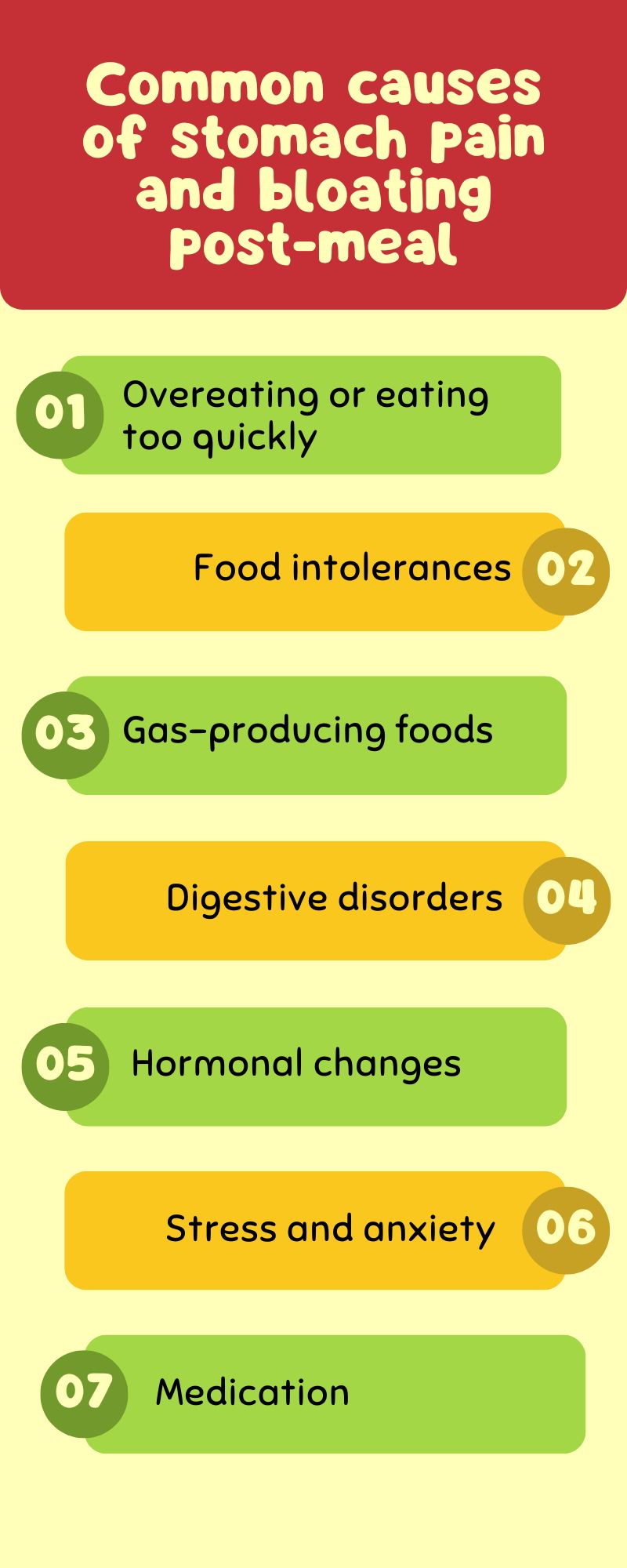
Understanding the root cause of your discomfort is important for finding relief. Multiple factors can lead to stomach pain and bloating after eating, including food choices, lifestyle habits, and underlying health conditions.
Here are some of the most common causes:
-
Overeating or eating too quickly
Consuming large meals or eating too quickly causes your stomach to stretch and can overwhelm your digestive system. This leads to bloating, gas, and stomach pain. Eating smaller portions more frequently and slowing down while eating can reduce this issue.
-
Food intolerances
Certain food intolerances, like lactose or gluten sensitivity, can cause digestive distress and bloating after eating. The body struggles to properly digest these foods, leading to excessive gas, discomfort, and bloating.
-
Gas-producing foods
Foods like beans, cabbage, and carbonated drinks can increase gas production during digestion. The buildup of gas in the digestive system can cause bloating and abdominal pressure, especially if consumed in large amounts.
-
Digestive disorders
Conditions like IBS (Irritable Bowel Syndrome), GERD (Gastroesophageal Reflux Disease), and gastritis can all cause chronic stomach pain and bloating. These digestive disorders interfere with normal digestion, leading to frequent discomfort.
-
Hormonal changes
For many women, hormonal fluctuations during menstruation, pregnancy, or menopause can affect digestion, leading to bloating and stomach pain. Hormonal changes can cause water retention, which adds to the feeling of fullness and heaviness.
-
Stress and anxiety
Stress and anxiety can disrupt digestion by slowing down the digestive process and leading to bloating. Stress hormones can interfere with digestion, causing the stomach to feel tight or full, contributing to bloating.
-
Medication
Certain medications, especially painkillers, antibiotics, and antidepressants, can interfere with digestion, leading to bloating and discomfort. If you suspect that a medication is causing your symptoms, consult your doctor.
Recognizing the cause of your stomach pain and bloating after eating is the first step toward finding an effective solution.
For more information on foods that can trigger bloating, check out our article on “20 Worst Foods That Cause Bloating”.
Now, let’s explore the symptoms that may indicate you’re dealing with this issue.
Symptoms of post-meal stomach pain and bloating
Stomach pain and bloating often manifest in different ways. It’s essential to recognize the symptoms so you can take the right steps to manage the discomfort.
-
Fullness or tightness
A feeling of tightness or fullness in your stomach is a common symptom of bloating. Your stomach may feel swollen or distended, making you uncomfortable.
-
Excessive gas
If you notice increased burping or passing gas after eating, this may indicate that your digestive system is struggling with gas buildup, leading to bloating.
-
Abdominal pain
Pain or cramping in the abdominal area can accompany bloating, especially if it’s caused by digestive issues like IBS or overeating.
-
Visible swelling
Bloating can sometimes cause your stomach to visibly swell, making it look and feel bigger than usual.
-
Nausea
Some individuals may also experience nausea or a general feeling of discomfort after meals, adding to the bloating and pain.
If you’re dealing with any of these symptoms regularly, it’s important to take note of your eating habits and lifestyle, as they could be contributing to your discomfort.
Let’s now look at some remedies to help alleviate stomach pain and bloating after eating.
Remedies for stomach pain and bloating after eating
If you’re struggling with stomach pain and bloating after eating, there are several remedies you can try to find relief. These treatments can reduce the discomfort and get your digestive system back on track.
-
Eat smaller meals more frequently
Opt for smaller portions, rather than eating large meals throughout the day. This can help prevent your digestive system from becoming overwhelmed and reduce the chances of bloating.
-
Probiotics
Probiotics rebalance your gut microbiome, supporting healthy digestion and reducing bloating. Explore The Good Bug’s probiotics for an added boost to your digestive health.
-
Stay hydrated
Drinking water before, during, and after meals helps get rid of excess sodium and prevent water retention, reducing the chances of bloating.
-
Herbal teas
Peppermint, ginger, and chamomile teas are known for their soothing properties. These teas can calm your digestive system and help relieve bloating and stomach discomfort.
-
Gentle exercise
Light physical activity, like a short walk after meals, can help boost digestion and reduce bloating. Regular exercise also supports a healthy digestive system.
-
Digestive enzymes
By adding digestive enzyme supplements to your routine, you can support your digestive system in processing food more efficiently and reduce bloating.
By incorporating these remedies into your routine, you can manage and reduce bloating after meals.
Now, let’s explore some preventative measures that can help you avoid discomfort in the future.
Preventative measures for reducing bloating
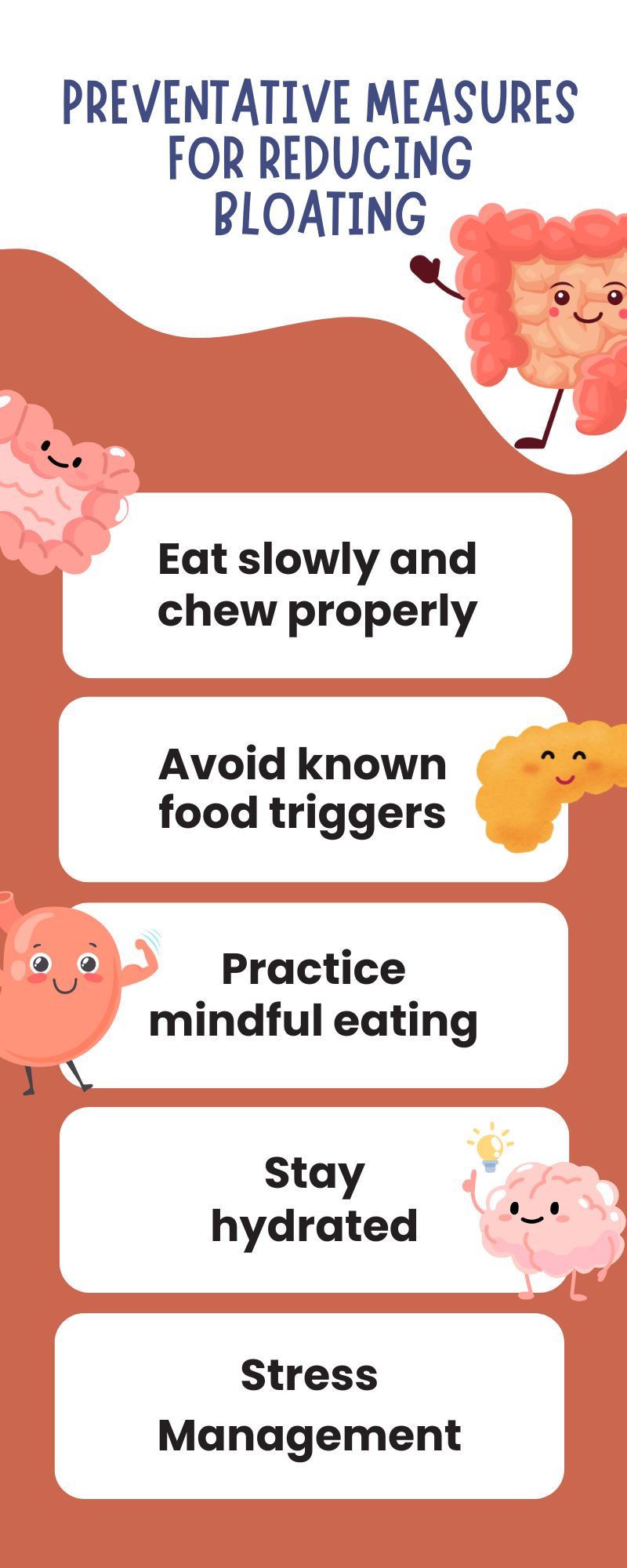
Preventing bloating after meals is all about making healthier choices and adopting habits that support proper digestion. Here are some simple tips to prevent bloating and discomfort after eating:
-
Eat slowly and chew properly
Eating quickly can make you swallow excess air, which can lead to bloating. Take your time, chew your food properly, and avoid distractions like talking or watching TV while eating.
-
Avoid known food triggers
Keep track of the foods that cause you to feel bloated. Common triggers include dairy, gluten, beans, and carbonated drinks. Limiting these foods can reduce bloating.
-
Practice mindful eating
Focusing on your meal and eating in a calm environment can help prevent overeating and promote proper digestion. Mindful eating reduces the chances of digestive upset.
-
Stay hydrated
Drinking enough water daily helps you stay hydrated and supports digestion. Avoid drinking too much liquid with meals to prevent distention.
-
Stress Management
Stress can disrupt your digestion and contribute to bloating. Try calming techniques, like deep breathing, yoga or meditation, to reduce stress and support healthy digestion.
With these preventive measures, you can significantly reduce bloating and stomach discomfort after meals.
If you're still dealing with bloating despite eating clean, it could be due to 'Carb Memory.' This explains why your body might still react, even with healthier choices. To find out more, watch this video on why you're bloated even after eating clean and how past eating habits impact your digestion.
Now, let’s discuss the importance of gut health and how to maintain it.
Gut health and its importance
Gut health is the foundation of good digestion and overall health. A healthy, balanced gut microbiome plays an important role in breaking down your food, absorbing nutrients, and maintaining a healthy digestive system. When the gut bacteria balance is disrupted, it leads to digestive issues like stomach pain, bloating, indigestion, and discomfort.
Long-term strategies for maintaining gut health include:
-
Eating a diet high in fiber and whole foods promotes healthy digestion
-
Incorporating probiotics to support beneficial gut bacteria
-
Staying hydrated ensures the smooth functioning of your digestive system
-
Reducing stress to prevent digestive slowdowns
Taking care of your gut is key to preventing bloating and ensuring good digestion. Explore The Good Bug’s range of products to support your gut health and maintain a balanced microbiome.
When to seek medical help
Bloating after meals is usually harmless, but in some cases, it can indicate a more serious issue. If you experience any of the following symptoms, it’s important to seek medical attention:
-
Severe abdominal pain
-
Unexplained weight loss
-
Blood in stool or vomit
-
Persistent bloating that lasts for days
If these symptoms occur, it’s essential to consult with a healthcare professional for an accurate diagnosis and treatment.
Stomach pain and bloating after eating are common but can be uncomfortable and disruptive. By understanding the causes and taking precautionary measures, you can reduce bloating and improve your digestive health. Incorporating remedies like smaller meals, probiotics, hydration, and stress management can help you feel more comfortable and maintain a healthy gut.
Ready to take control of your digestive health? Start by exploring The Good Bug’s probiotics to support your gut and reduce bloating naturally.
Frequently Asked Questions (FAQs)
What causes stomach pain and bloating after eating?
Overeating, food intolerances, digestive disorders, or hormonal changes can cause stomach pain and bloating.
How can I relieve stomach bloating after meals?
Drinking water, eating smaller meals, incorporating probiotics, and practicing light exercise can help reduce bloating and stomach discomfort.
When should I seek medical help for bloating?
If you experience persistent bloating, severe pain, blood in stool, or unexplained weight loss, it’s important to seek medical advice.
Can probiotics help with bloating after eating?
Yes, probiotics help restore balance to your gut microbiome and improve digestion, reducing bloating and discomfort.
What food items should I avoid to prevent bloating?
Avoid high-FODMAP foods like beans, onions, and carbonated drinks. Dairy and gluten can also trigger bloating in sensitive individuals.
